
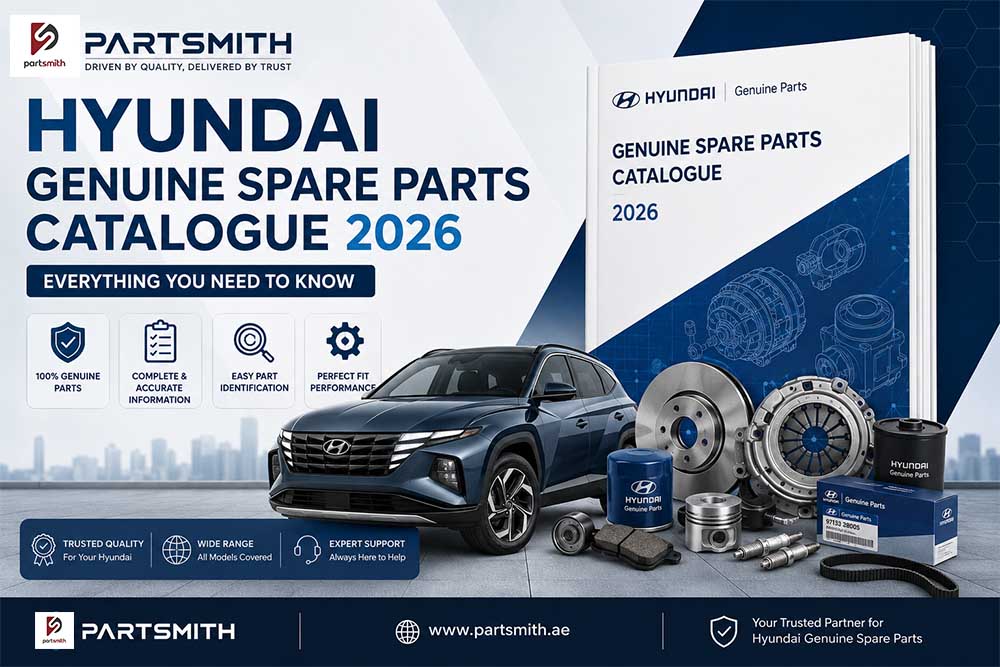
Owning a Hyundai—whether it is a rugged Creta, a sleek Verna, or a futuristic Ioniq 5—comes with a promise of reliability and smooth driving. But as any seasoned car owner will tell you, a vehicle is only as good as the parts that keep it running. When it comes time for repairs or routine maintenance, the market is flooded with aftermarket options that promise to save you money. However, cutting corners on car parts often leads to bigger, more expensive problems down the road.
This is where understanding the Hyundai Genuine Spare Parts Catalogue becomes your secret weapon.
If you have ever felt overwhelmed at a mechanic's shop or confused by part numbers online, you are not alone. In this comprehensive guide, we are going to break down exactly what this catalogue is, how to use it to your advantage in 2026, and why sticking to genuine OEM (Original Equipment Manufacturer) parts is the smartest decision for your vehicle’s health, safety, and resale value.
At its core, the Hyundai Genuine Spare Parts Catalogue is the official, master database created by Hyundai (specifically through its parts division, Hyundai Mobis). Think of it as the complete anatomical blueprint of your specific car.
Every single component that makes up your vehicle—from the massive engine block down to the tiny plastic clips holding your interior door panels together—is documented, illustrated, and assigned a unique identification number in this catalogue.
Mechanics and authorized service centers use this database daily to ensure they are ordering the exact fit for a repair. Instead of guessing which brake pad fits a 2022 Hyundai Tucson versus a 2026 model, the catalogue provides a foolproof system. It is categorized logically into major automotive systems, including:
By using this official resource, you eliminate the guesswork and ensure that whatever part is being replaced matches the factory specifications exactly.
It is tempting to buy a cheaper, third-party air filter or suspension strut. They look almost identical to the naked eye, right? Unfortunately, the differences usually lie in the metallurgy, material quality, and engineering tolerances.
Here is why relying on the official catalogue and buying genuine parts is non-negotiable in 2026:
1. Precision Fit and Engineering
Modern Hyundai cars are incredibly complex machines. With the rise of Advanced Driver Assistance Systems (ADAS) and sophisticated engine management computers, every part needs to communicate and fit perfectly. A genuine part is manufactured on the exact same assembly line, using the exact same molds and materials as the part your car originally came with. An aftermarket part is reverse-engineered, which often leads to slight misalignments, rattling, or premature wear.
2. Protecting Your Manufacturer Warranty
This is perhaps the biggest financial reason to stick to genuine components. If your car is still under its factory or extended warranty, installing a non-genuine part can void it. For example, if you use a cheap, aftermarket oil filter that fails and starves your engine of oil, Hyundai is not going to cover the cost of a new engine under warranty. Using parts verified through the Hyundai Genuine Spare Parts Catalogue ensures your warranty remains intact.
3. Longevity and Safety
Counterfeit or low-grade aftermarket parts wear out much faster. While you might save 20% on the purchase price of an aftermarket brake pad, if it wears out twice as fast or fails to stop your car effectively during an emergency braking situation, that "saving" becomes a massive liability. Genuine parts undergo rigorous crash and durability testing to meet global safety standards.
How to Navigate the Catalogue Like a Pro
You don’t need to be a certified mechanic to understand how to find the right parts for your car. If you want to take charge of your car's maintenance, here is how you navigate the parts ecosystem.
Step 1: Always Start with Your VIN
Your Vehicle Identification Number (VIN) is a 17-character code that acts as your car's fingerprint. It tells the manufacturer the exact year, model, engine type, and trim level of your vehicle.
When you or your service center inputs your VIN into the Hyundai parts system, the catalogue filters out everything else and only shows the parts that fit your specific car. You can usually find your VIN on your car’s registration document (RC book), the driver’s side door jamb, or visible through the lower driver’s side of the windshield.
Step 2: Understanding Part Numbers
Hyundai part numbers usually consist of a 10-digit format (e.g., 26300-35505, which is a common part number for an oil filter).
When ordering parts online or at a dealership, quoting this exact 10-digit number guarantees you get the right item.
Step 3: Using Exploded View Diagrams
If you ever get access to the visual interface of the catalogue, you will see "exploded views." These are highly detailed, 3D line drawings of your car's assemblies pulled apart so you can see every nut, bolt, and washer. If you are missing a tiny bracket, you simply find the section (e.g., Front Bumper Assembly), look at the diagram, find the numbered bracket, and match it to the part number listed below.
To give you a practical sense of what people look for in the catalogue, here are the most commonly replaced maintenance parts that you should never compromise on:
The automotive aftermarket is plagued by counterfeit parts. These are fake components packaged in boxes designed to look exactly like genuine Hyundai Mobis packaging. Identifying these fakes is crucial. Here is how you can protect yourself:
1. Scrutinize the Packaging: Genuine parts come in high-quality, sturdy cardboard boxes or heavy-duty plastic sleeves. The printing should be sharp and clear, usually featuring the blue Hyundai Mobis logo. If the box feels flimsy or the ink looks faded and blurry, be suspicious.
2. Check the Hologram and MRP Label: In markets like India, genuine Hyundai parts feature a highly detailed, 3D hologram sticker. Counterfeits often have a flat, shiny sticker that doesn't change depth when you tilt it. Additionally, check for a clear MRP label with a scannable barcode or QR code.
3. Analyze the Price: If a trusted vendor is selling a genuine headlight assembly for ₹15,000 and another shop offers a "genuine" one for ₹6,000, walk away. While slight discounts exist, massive price drops are the biggest red flag for counterfeit goods.
4. Inspect the Part Itself: Genuine parts often have the Hyundai logo and the 10-digit part number stamped, engraved, or molded directly into the metal or plastic. Fake parts often skip this step or use cheap, easily removable stickers instead.
The Impact on Resale Value
When the time comes to upgrade to a newer model, the maintenance history of your current car plays a massive role in its valuation.
Used car buyers and dealership evaluators are becoming increasingly savvy. They look for service records. A car that has been exclusively maintained using parts sourced directly from the Hyundai Genuine Spare Parts Catalogue holds a significantly higher resale value than a car patched together with generic aftermarket parts.
Having a service booklet stamped by authorized centers proves to the next owner that the car has not been compromised. It shows that the structural integrity, safety systems, and engine internals are exactly as the manufacturer intended. This peace of mind translates directly into a higher selling price, easily covering the slight premium you paid for genuine parts over the years.
Where to Buy Authentic Parts in 2026
With the rise of e-commerce, buying auto parts has never been easier, but it has also never been riskier. To ensure you are getting 100% authentic components:
Final Thoughts
Taking care of a car doesn't have to be a stressful guessing game. By understanding the importance of the Genuine Hyundai Spare Parts, you empower yourself as a car owner. You ensure that every rupee you spend on maintenance is going toward the long-term health, safety, and performance of your vehicle.
The next time your car is due for a service or needs a repair, don't just blindly accept whatever part a local mechanic pulls off the shelf. Ask questions, request part numbers, and insist on genuine. Your Hyundai was built with precision engineering—keep it that way by giving it exactly what it needs.
Q: Are Hyundai OEM parts and Hyundai Mobis parts the same thing? Yes. Hyundai Mobis is the official parts and service arm for Hyundai Motor Company. Any part in a genuine Mobis box is the official OEM part for your vehicle.
Q: Can I access the catalogue online as a regular customer? While the full, highly technical dealer software is usually restricted to authorized workshops, Hyundai offers consumer-facing parts portals and apps in various regions where you can search for common parts using your VIN.
Q: Is it okay to use aftermarket parts for non-critical things, like floor mats or cabin lights? For aesthetic accessories, high-quality aftermarket brands are usually fine and won't void your mechanical warranty. However, for anything electrical, mechanical, or safety-related, always stick to the official catalogue.